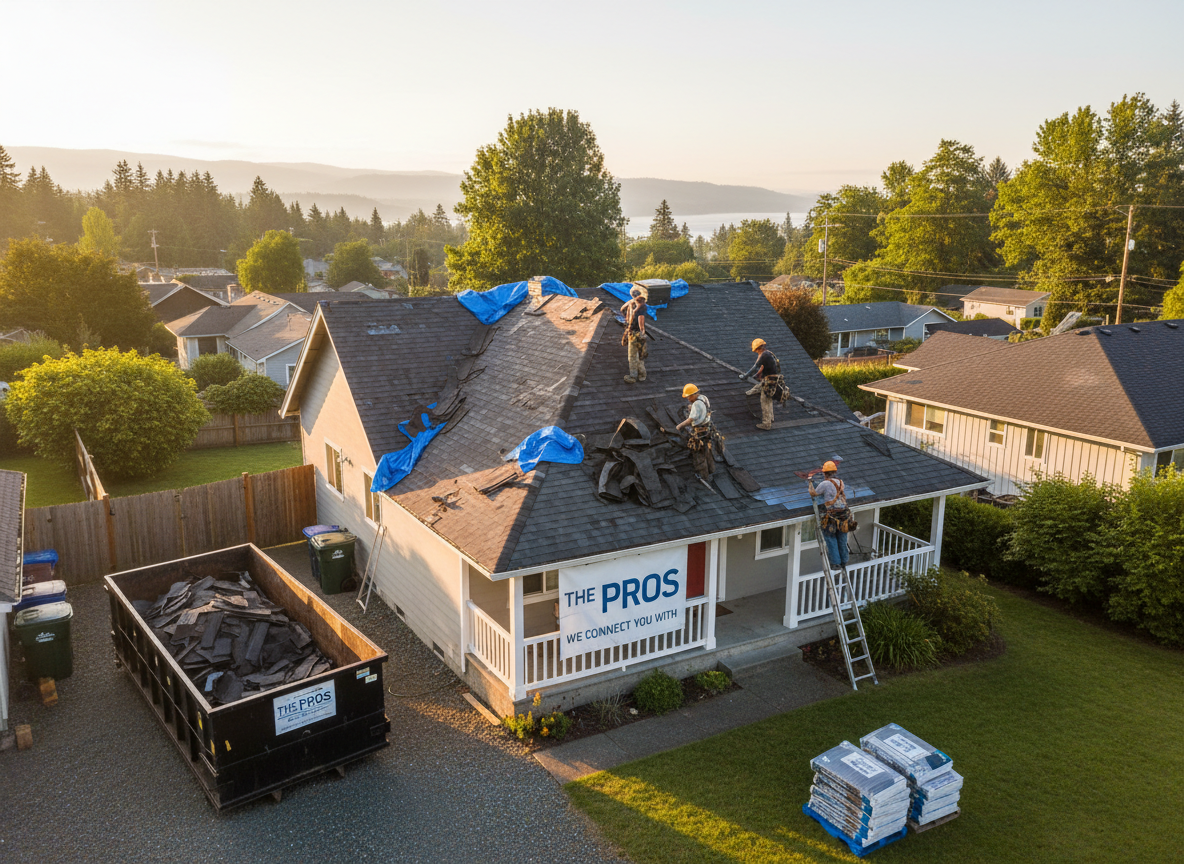
Longview homes in Pine Tree and Spring Hill often carry asphalt shingles installed decades ago that now face repeated high-wind thunderstorms. The pros we connect you with start by checking decking condition because humidity keeps wood moist longer and hidden rot spreads under lifted shingles. Full tear-offs are common here rather than overlays since multiple layers trap heat during humid summers and shorten the life of new material.
Eastman Road and North Longview properties sit on flatter lots where drainage can pool against the lower roof edge after heavy rain. Replacement crews pay extra attention to step flashing around chimneys and valleys because mild winters still bring enough freeze-thaw cycles to push water under old metal. Proper underlayment and ice-and-water shield in those zones prevent the leaks that typically bring homeowners to roof leak repair services first.
Nearby towns such as Kilgore and Gladewater share the same clay-heavy soil that shifts slightly with seasonal moisture changes, so ridge ventilation must be sized correctly to keep attic temperatures stable. The pros we connect you with match shingle color and weight to the existing housing stock so the new roof does not stand out against neighboring homes on the same street.
Technician insight
In Longview the thing that catches most people out with roof replacement is how clay soil and poor attic airflow in Pine Tree and Judson homes let heat and moisture stay trapped after those summer thunderstorms, so skipping extra ridge vents or underlayment turns a straightforward job into another leak call within two seasons.
Pine Tree Home Roof Replacement
Thunderstorm winds had lifted shingles on a 1980s home near the Longview Public Library. Inspection showed two layers of old asphalt trapping moisture against the deck. The crew removed both layers, replaced soft plywood sections, and installed new shingles with full underlayment and added ridge vents. The roof now handles summer humidity without the attic heat buildup that previously caused leaks.
How it works
- 1
Site Assessment
Walk the roof and attic to note existing layers, deck condition and drainage patterns typical for Longview lots.
- 2
Material Selection
Choose shingles and underlayment rated for high humidity and wind exposure common in Gregg County.
- 3
Tear-Off and Deck Repair
Remove old layers completely and replace damaged plywood before new underlayment goes down.
- 4
Installation and Ventilation
Install new roofing with correct flashing and ridge vents sized for local summer heat loads.
- 5
Final Walk and Cleanup
Check every seam and clear debris from gutters and yard before leaving the site.
Pricing
Cost varies with home size, number of layers and any deck repairs found during tear-off in Longview neighborhoods.