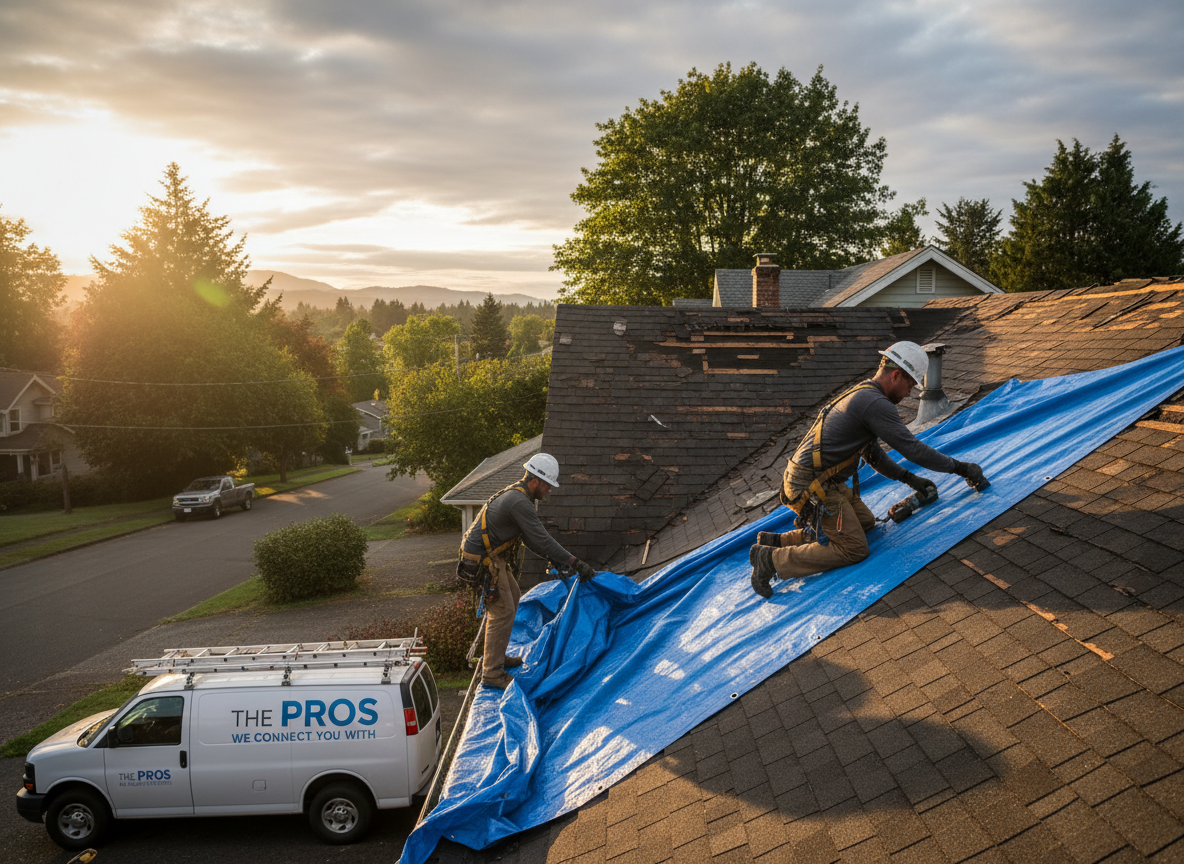
Longview's hot humid summers and frequent thunderstorms push roof systems hard, especially on homes built decades ago in neighborhoods such as Spring Hill and North Longview. Water finds its way under lifted shingles or around flashing on chimneys and vents, then travels along rafters before showing up as ceiling stains. The pros we connect you with start by tracing the actual entry point rather than guessing from interior marks, because wind-driven rain often enters several feet from where it drips inside.
Gregg County terrain and mature tree cover around Eastman Road and Pine Tree add another layer: pine needles and oak debris trap moisture against valleys and low-slope sections. When a sudden downpour follows weeks of heat, the combination can overwhelm older underlayment in a single storm. Technicians check attic ventilation and insulation condition on the same visit because trapped humidity after repair can lead to mold if airflow is poor.
Homes near Longview Mall or the Alley-Carlson House often sit on slightly rolling lots where runoff concentrates at one eave. Emergency work here includes temporary diversion measures until permanent materials can be matched, since many streets still have original composition shingles that are no longer made. Skipping proper step flashing or counter-flashing on these older roofs simply moves the leak to the next rain.
Nearby cities like Kilgore and Marshall share the same weather pattern, yet Longview's denser tree canopy and older downtown stock create distinct access challenges. Crews must work around power lines and tight setbacks while keeping interior disruption minimal. The pros we connect you with document every step with photos so homeowners see exactly where water traveled and why certain repairs were required.
Technician insight
In Longview, the thing that catches most people out with Emergency Roof Repair is how thunderstorms hit older homes in Pine Tree and Judson where heavy tree cover hides lifted shingles until water has already traveled across the attic floor.
Thunderstorm Leak on Eastman Road
Water appeared in a ceiling after a spring storm. The pros we connect you with traced it to a valley blocked by pine debris on a 1980s home. They installed temporary diversion, removed the debris, and replaced the underlayment and shingles in that section.
How it works
- 1
Initial Assessment
The pros we connect you with inspect the roof, attic, and interior water paths to locate the true entry point before any temporary measures.
- 2
Temporary Protection
They install targeted tarps, sealants, or diversion channels to stop active leaking during the next thunderstorm.
- 3
Material Matching
Technicians source shingles or flashing that match the existing roof age and color found on Longview homes.
- 4
Permanent Repair
They replace damaged sections, reseal flashing, and verify attic ventilation to prevent future moisture issues.
Pricing
Cost depends on roof access, extent of hidden damage, and whether temporary protection is needed before permanent work.